

Artificial intelligence is rapidly changing how software is designed, built, and maintained. AI coding assistants are becoming a common part of the developer toolkit. Yet most of these tools are designed around static source code repositories, not the dynamic live environments where many enterprise Smalltalk-based systems actually run.
That’s why we’re excited to introduce the VAST Platform AI Assistant, our new open-source project that brings AI-assisted development directly into the VAST Platform IDE. Available now on GitHub, the assistant is designed specifically for the VAST Smalltalk environment, allowing developers to explore and interact with their live systems using natural language while helping them write, debug, and understand code more effectively.
The VAST Platform AI Assistant is available for VAST Platform 14.1 and later, and getting started is straightforward. The assistant is distributed through our GitHub repository and Loads directly into the VAST development environment using the same tooling many developers already rely on for managing source and configuration maps.
Once installed, the assistant appears as a dedicated window inside the VAST IDE where developers can interact conversationally with AI models while working within their live system.
From this interface, developers can ask questions about their system, request explanations of existing code, generate or refactor Smalltalk methods, and even attach debugging artifacts such as walkbacks or logs for analysis.
Because the assistant analyzes the actual system developers are working on, its responses are grounded in the real application context rather than potentially inaccurate pre-trained data. The result is an experience that feels less like using a chatbot and more like collaborating with a pair programmer embedded directly in the IDE.
But introducing AI into a development environment like VAST raises an important question: how can these capabilities strengthen the development process rather than disrupt it?
As we enter the era of large language models (LLMs), the question for us at Instantiations wasn’t simply “Can we add AI to VAST?”—it was “How can we introduce these capabilities responsibly while keeping developers in control?”
That question led us to the principles that guide our approach to innovation.
Artificial intelligence is a powerful catalyst for change. But at Instantiations, we believe the difference between meaningful progress and unnecessary disruption lies in how technology is applied.
As we developed the VAST Platform AI Assistant, our goal wasn’t simply to add AI capabilities to the IDE. We wanted to introduce them in a way that strengthens the development experience developers already rely on. That approach reflects our philosophy of Responsible Evolution™, built on three core principles: Enablement, Continuity, and Augmentation.
These principles guide how the VAST AI Assistant integrates AI into the VAST development environment while keeping developers firmly in control.
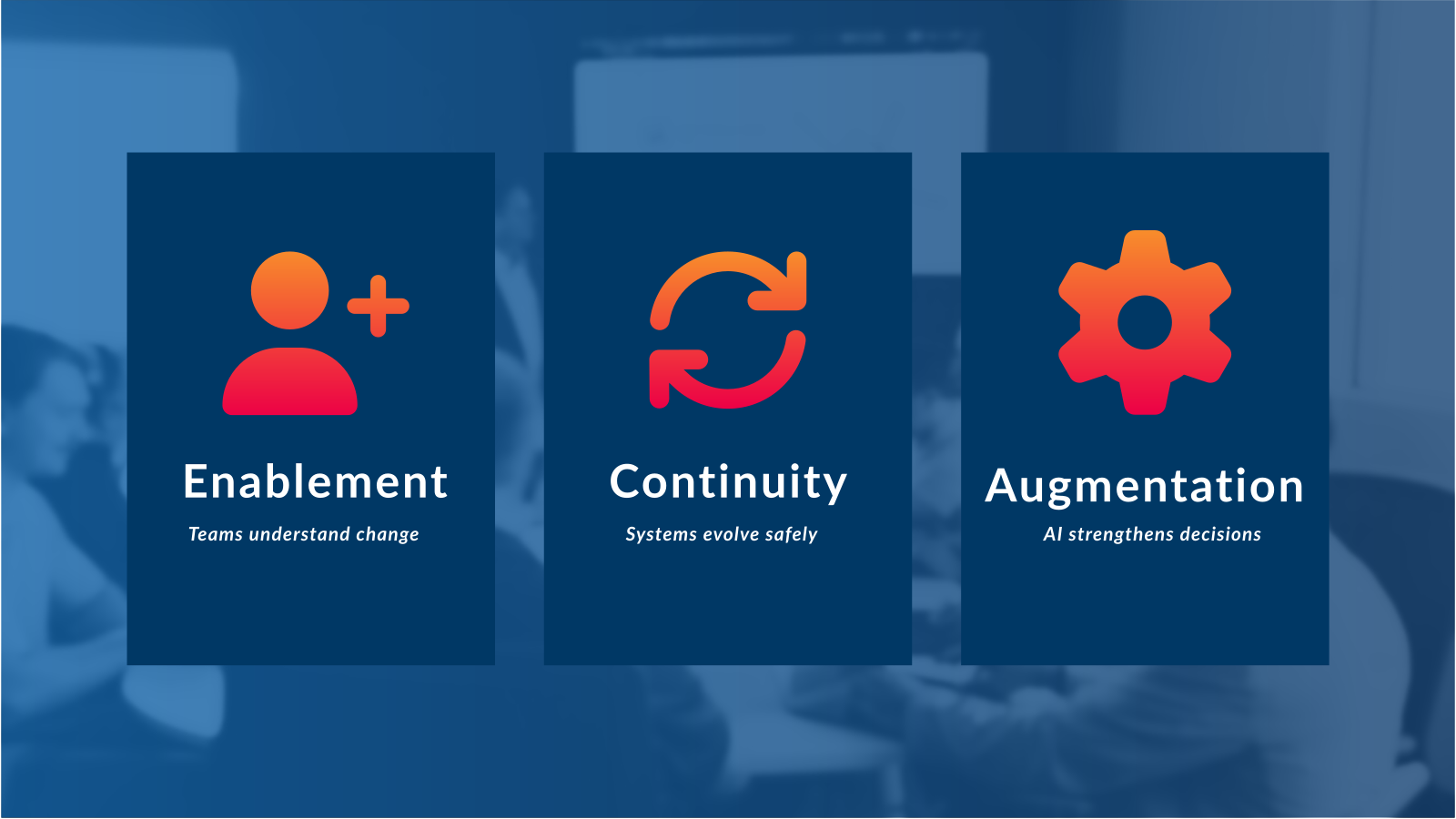
The VAST AI Assistant is designed first and foremost to empower developers, not replace them.
By allowing developers to interact with their systems using natural language, the assistant helps teams investigate code, generate ideas, and navigate complex systems more efficiently. Developers can ask questions such as:
Instead of manually searching through multiple tools and browsers, developers can explore their systems conversationally within the IDE. This reduces friction and helps teams move faster while continuing to work within the development environment they already know.
Enterprise systems often evolve over many years, and development tools must respect the workflows that teams depend on.
The VAST AI Assistant was designed to integrate seamlessly into the existing VAST development process rather than bypass it. For example, when the assistant proposes code changes, developers can review them with the already existing tools before applying them. Or if the reply was a Smalltalk script instead, developers can easily spawn a Workspace with its contents.
In other words, AI-generated suggestions remain reviewable, inspectable, and fully under developer control, ensuring that AI enhances the development workflow without introducing unnecessary risk.
Perhaps the most powerful aspect of the VAST AI Assistant is how it augments developer insight.
Because the VAST AI Assistant connects directly to the live Smalltalk image, it can investigate code and explore relationships between system components while responding to developer questions."
As a result, the assistant becomes more than a code generator, it becomes a tool for understanding and exploring complex systems.
Developers can use it, for example, to:
The result is an AI capability that enhances developer insight while preserving the exploratory, live-system experience that has long made Smalltalk development so productive.
The capabilities we’ve explored here are only the beginning. To see how the VAST AI Assistant works in a real development workflow, watch this live demonstration that we presented at the virtual UK Smalltalk Meetup (UKSTUG) on March 25th at 3:00 PM EDT.
During the session, members of the VAST engineering team demonstrated how the assistant interacts with the live Smalltalk environment, investigates code in real time, and helps developers better understand their systems.
We also share a preview of what’s coming next, including upcoming enhancements and support for multiple LLM providers as part of our enterprise roadmap.
The current release of the VAST Platform AI Assistant focuses on integrating Google’s Gemini models directly into the VAST development environment, but it represents only the first step.
Our roadmap continues to expand AI capabilities in ways that support enterprise adoption while keeping developers in control. Upcoming areas of focus include:
We’ll explore these capabilities in more detail in an upcoming technical follow-up post.
